I haven’t put out a Pic email in quite a while. Then, this weekend at the Div 7 (NMRA) show, I was talking to Chris Mayhew from the Cincinnati RR Club. Chris has a great blog (The Kentucky/Ohio Railfan: https://kentuckyohiorailfan.wordpress.com/ – check it out!) and we talked about how occasionally authors go on dry spells. I feel like I’ve struggled with the Pic emails for almost a year now. But our discussion got me thinking about how I started. So…I went back to the basics – looking at fascinating pics from Pinterest.
Editors note: I’m an avid use of Artificial Intelligence. Out of curiosity I asked Googles Gemini AI about some of the pictures here. I posted the responses in italics. I respect Kevin’s hard work and overall knowledge of rail history. The AI was done on my part to see how it would in the final past. AI can make mistakes. —Kurt
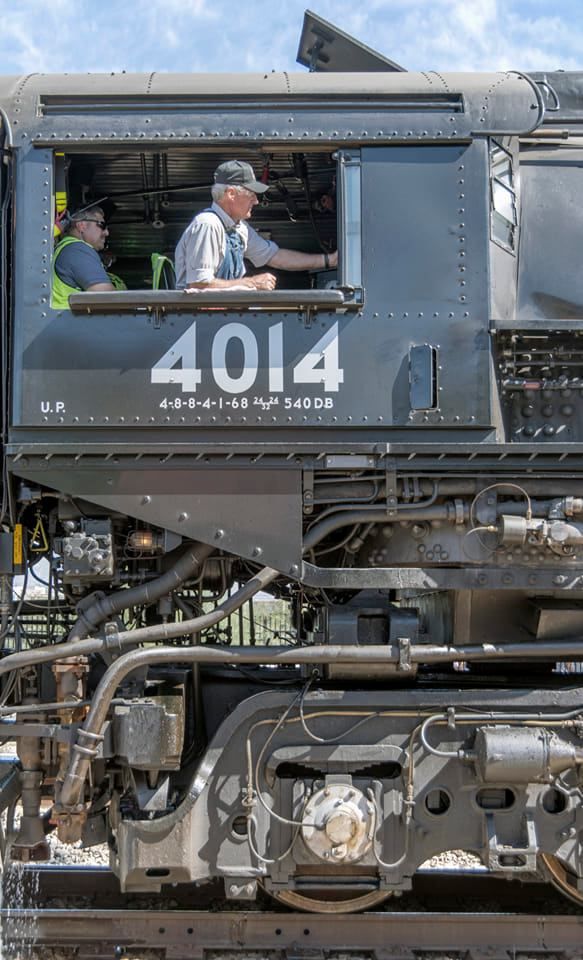
The UP Big Boy ran across the country this spring and summer. I found this pic from a few years back that reminded me of the excitement that a powerful locomotive brings railfans and the general public. Caption: “Union Pacific 4-8-8-4 4014, Tucson, Arizona, October 17, 2019 – The floor of the Big Boy’s cab is 8 1/2 feet, or 2.50 meters, above the railhead. This is a very large locomotive! Ed Dickens at the throttle of Union Pacific 4-8-8-4 4014, Tucson, Arizona, October 17, 2019.” Photo provided through Pinterest by Ron Currens.
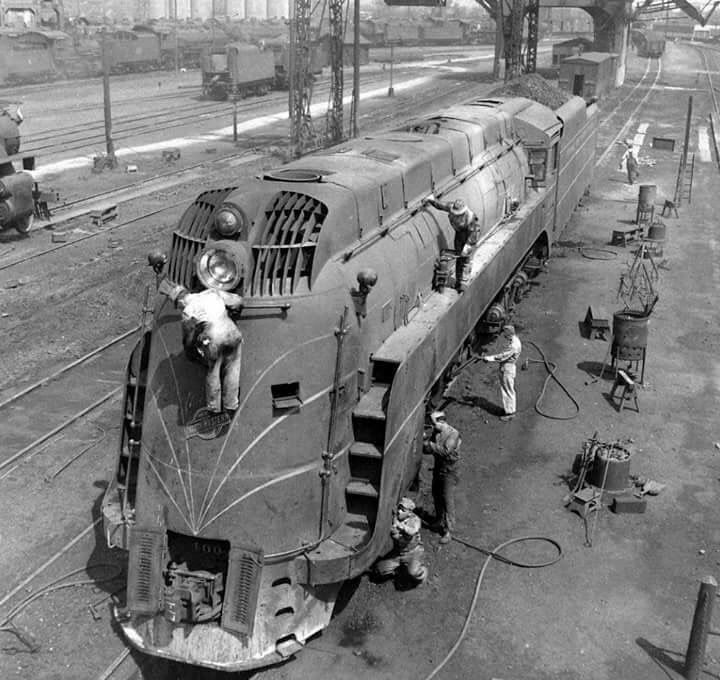
I believe this is a Chicago & Northwestern E4 (Hudson, 4-6-4) fully shrouded. These were built by ALCO around 1937. You can imagine the dark green paint with gold pinstripes, and the C&NW logo seen on the front. This photograph was taken at the 40th Street Engine facility just west of the coal chute. (Pinterest)
The image is a black-and-white photograph showing several workers performing maintenance on a massive, streamlined steam locomotive in an active rail yard. The locomotive features a smooth, art deco-style outer casing with a distinctive slatted front grille, above a logo plate on its nose that reads “CHICAGO AND NORTH WESTERN LINE”. Railroad workers can be seen positioned all over the engine, with some climbing on the front casing near the headlight, others standing along the elevated running boards, and several working at ground level near the exposed driving wheels.
Historical Context of the Photograph This image was captured in December 1942 by renowned photographer Jack Delano, who was documenting wartime railroad operations and labor in Chicago for the U.S. Office of War Information (OWI).
History of the Locomotive The engine pictured is a Chicago & North Western Railway (C&NW) Class E-4. It was one of only nine streamlined 4-6-4 “Hudson” type steam locomotives (numbered 4001–4009) built for the C&NW by the American Locomotive Company (ALCO) in the spring of 1938.
- Design & Purpose: Built originally as coal burners (and later converted to oil), the E-4 class featured massive 84-inch driving wheels capable of high speeds. Their bullet-nosed shrouds were painted in a dark olive green with gold striping.
- Service Life: The streamlined styling was intended to match the C&NW’s premier high-speed “400” passenger trains. However, the railroad began adopting new EMD diesel passenger locomotives around the exact same time. As a result, the powerful E-4s spent most of their active careers pulling heavy, conventional passenger trains on the main route between Chicago and Omaha.
- Retirement: As dieselization took over the railroad industry in the 1950s, the E-4 class was gradually retired between 1953 and 1956. The last two surviving engines (Nos. 4008 and 4009) were temporarily kept in Escanaba, Michigan, where their boilers were used as stationary steam generators to thaw frozen iron ore cars during the winter. They were ultimately scrapped on-site in 1961, and sadly none of these unique locomotives were preserved.
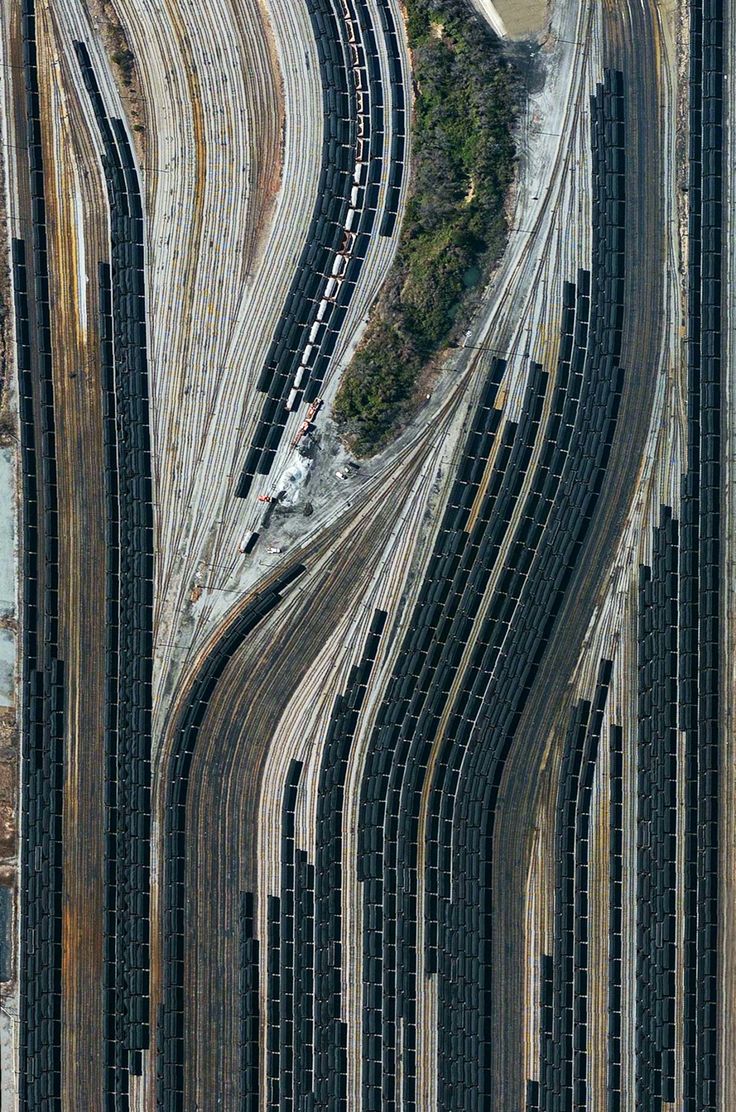
This pic not only appeals to railfans, but the curve/wave of the tracks has an artistic aspect. This yard is the Norfolk & Southern Lamberts Point Pier 6 station in Norfolk, VA. It’s the largest coal-loading station in the Northern Hemisphere and serves as the temporary depot for the company’s fleet of 23,000 coal cars. (Pinterest)
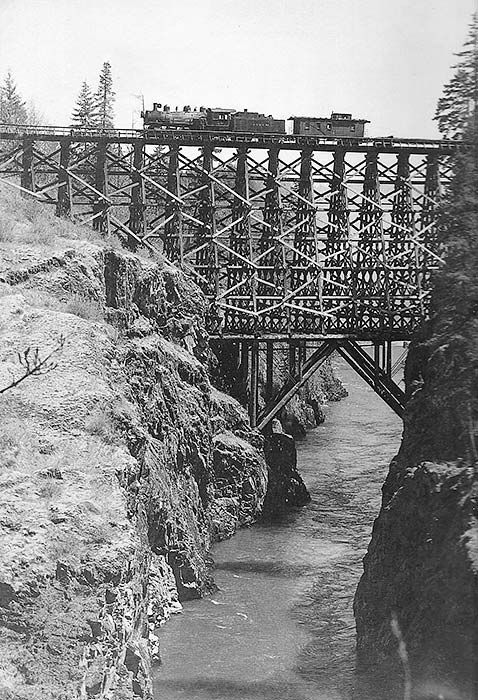
Check out this trestle! It looks like they built a steel support across the river. Then they built a wooden trestle above the steel to support the track. I don’t have any info on this pic. The lettering on the tender is short – maybe (4) letters followed by RR (?). Nice wooden caboose. (Photo provided by Bill Moore through Pinterest.)
The bridge is a striking example of historical wooden railroad engineering, designed to navigate extremely rugged terrain. The structure relies on tall, heavily cross-braced wooden trestle bents anchored directly into the steep, jagged rock faces on either side of the canyon. To cross the widest open gap directly above the rushing river, the center of the bridge utilizes a large wooden deck truss supported between the main timber towers. The sheer cliffs, rapid water, and scattered evergreen trees suggest an environment highly characteristic of late 19th- or early 20th-century logging or mining railroads in mountainous regions like the Pacific Northwest or western Canada.
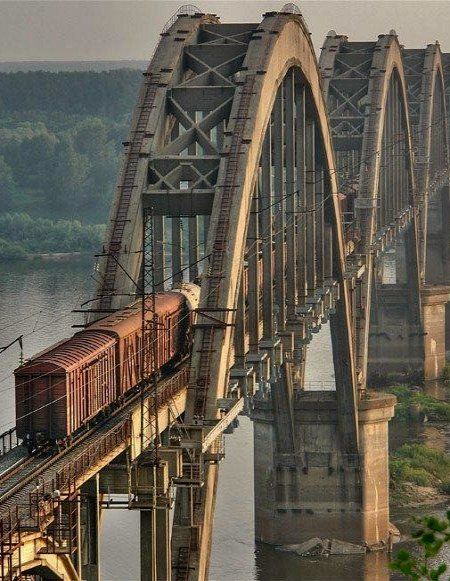
Here’s another pic I have no info on. It looks like there are at least three large arches. The steel members are huge. (Pinterest)
The image displays the Sartakovsky Railway Bridge, a striking multi-span tied-arch bridge crossing a wide river. A freight train is captured crossing its single electrified track, surrounded by the bridge’s massive, ribbed concrete arches and heavy support piers.
Located over the Oka River in Nizhny Novgorod, Russia, the Sartakovsky Railway Bridge was constructed between 1956 and 1961. Designed by the Moscow-based institute “Giprotransmost” under chief engineer A.B. Druganova, it officially opened to rail traffic in 1961. Its completion was a significant infrastructural milestone for the region, connecting the local Gorky (Nizhny Novgorod) railway node with the Arzamas railway line. This new route finally allowed long-distance passenger and freight trains to travel directly to the city’s main Moskovsky railway station.
Recognized for its distinctive, lace-like concrete architecture, the bridge remains a vital and heavily guarded piece of Russian railway infrastructure. Its aesthetic appeal is so well-regarded locally that it was celebrated on a national Russian postage stamp in 2009.
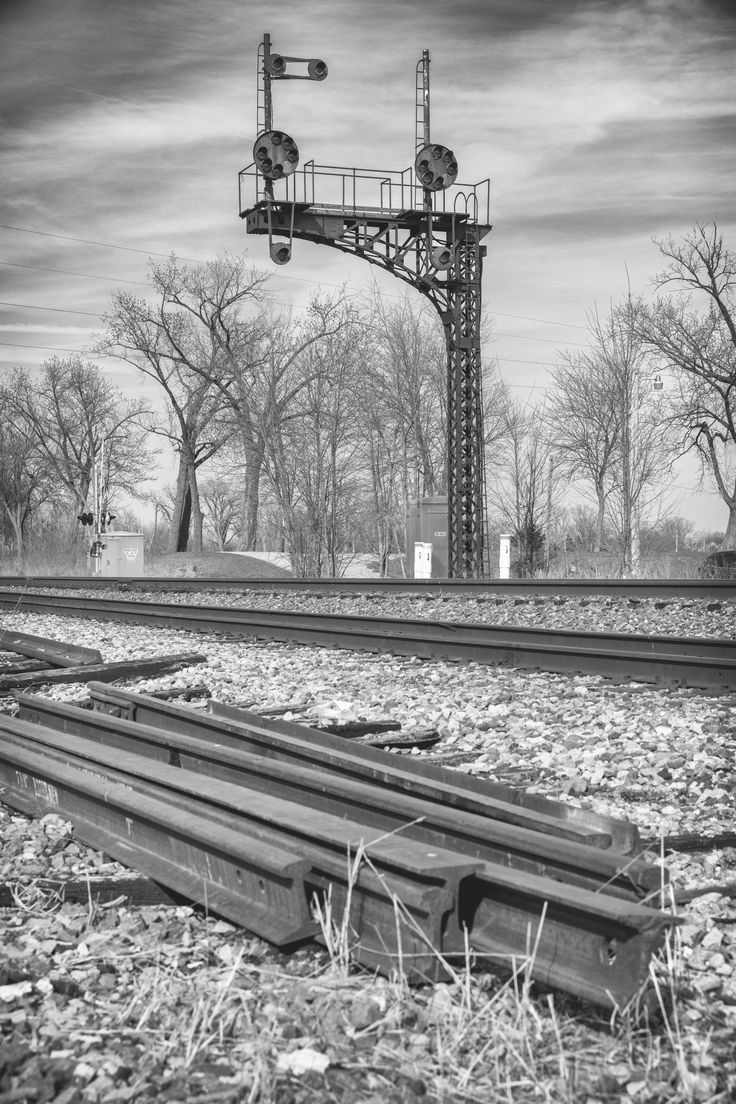
These are B&O signals at Deshler, OH. The current track looks like continuous rail, and the rails on the side seem to be of different lengths. I’m guessing they cut out bad sections of rail and welded in replacements. Great photography – barren trees with gloomy skies done in B&W. (Pinterest)
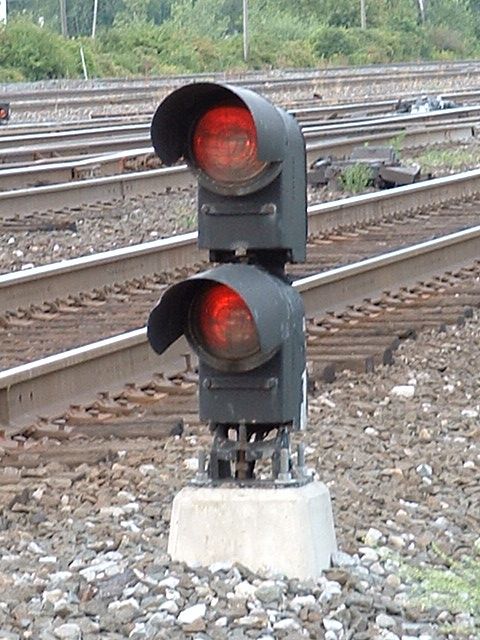
At one point, I was looking for good shots of dwarf signals. This pic would have helped. I picked this photo off Pinterest, but I think it originates from Railroad Signals of the US, Searchlight Signals Home . If you’re researching signals, this site is a pretty good reference.
I’ve seen this 2-2-4T before. This was built by Danforth & Cooke, and was sold to the Central Railroad of New Jersey.
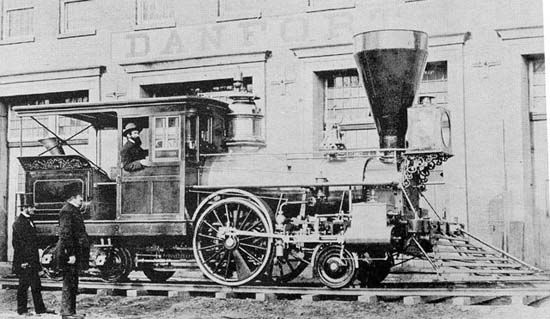
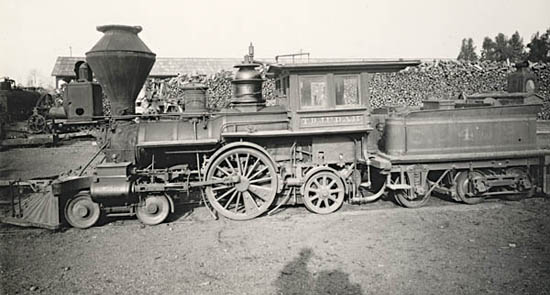
Danforth & Cooke were better known for building 4-2-4T engines – single drive axle. They were responsible for building the Central Pacific “Huntington”. This pic shows the Huntington’s sister – Central Pacific #4 the
“T. D. Judah,” named after the man who surveyed the Central Pacific’s route across the Donner Pass. Check out more Danforth & Cooke locos at trainweb.org/jeffhartmann/DanforthAndCook4-2-4T.html?utm_source=Pinterest&utm_medium=organic .
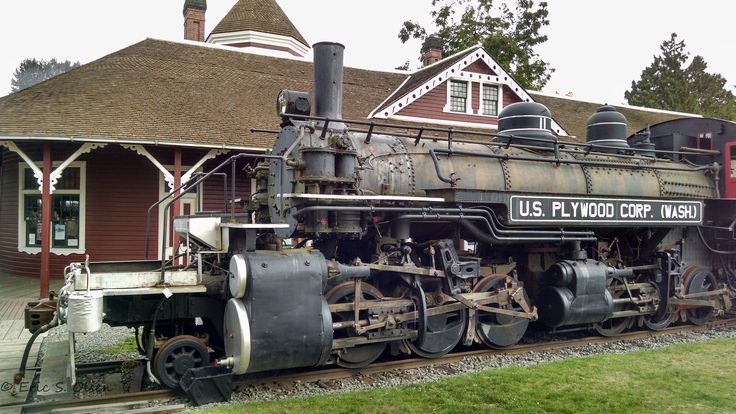
Here’s a display piece: US Plywood’s #5970, 2-6-6-2, displayed at Snoqualmie, WA. This compound Mallet was built by Baldwin around 1926. (Eric Olsen through Pinterest)
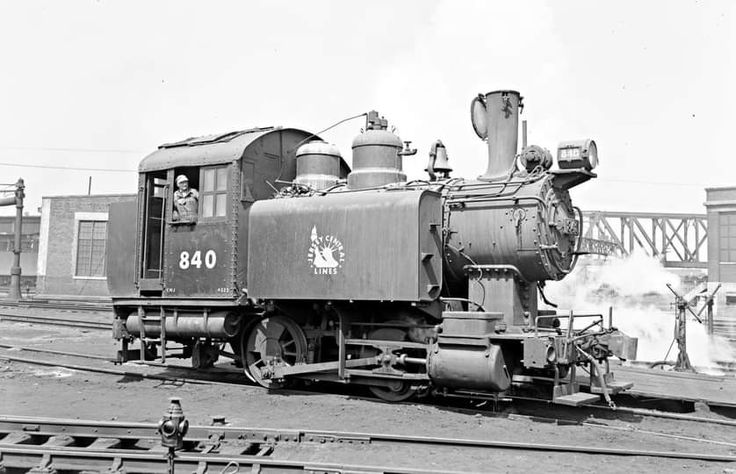
These saddletank 0-4-0Ts were commonly referred to as Docksiders. Jersey Central #840 looks at home switching cars around the barge docks. (Frank Musick through Pinterest.)
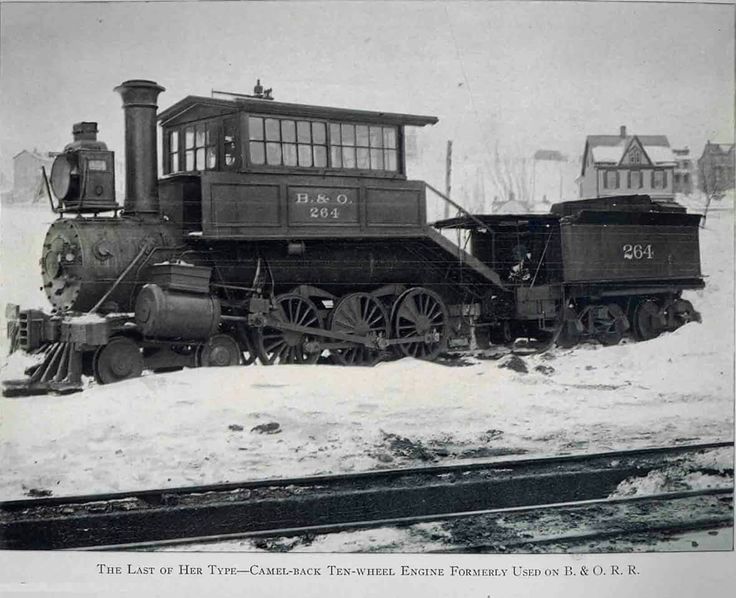
B&O Camelback #264 freight sits quietly. The caption says she’s the last of her kind and implies that she’s either on static display or sold to someone who has not renumbered her. The tender looks woefully void of fuel. (Sheryl Marshall through Pinterest.)
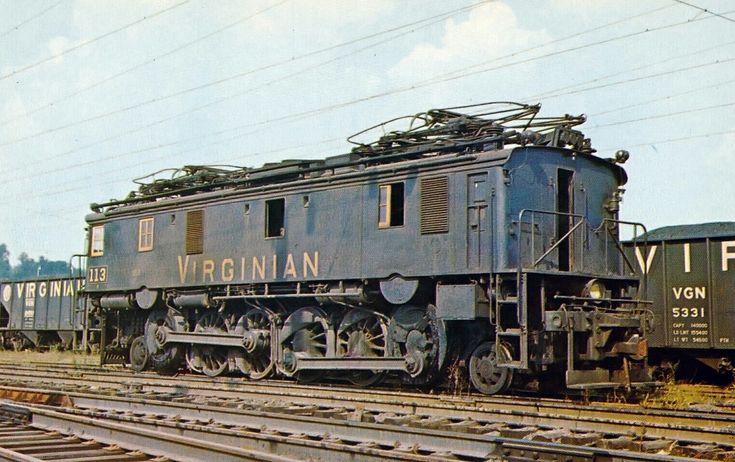
Let’s look at an east coast electric. I don’t know enough about electrics to tell much, but… Virginian Railway #113 was an EL-1A built jointly by Westinghouse & ALCO. (Pinterest).
Monty added: That Virginian loco had a strange life (note there are no windows on this end, it had an actual front/back). The single EL-1A units were bought after the EL-3A triple units and were basically the same design. #113, 114, and 115 were joined in the shops to make up a “new” 3A type #111 in Sept ’26 about 6 months after being delivered. Less than 6 months later those new triple units were again split back into the single units with the original numbers. In Dec ’41 that was undone yet again to remake #111 and then sometime later broken back apart into individual units. #113 had the distinction to be the last “squarehead” to operate with a work train in Oct ’59 before being scrapped in 1960
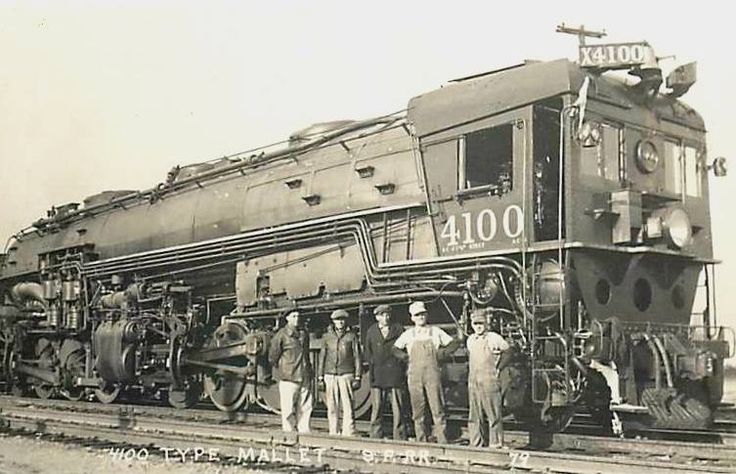
Going to the west coast, SP #4100 was a class AC-4, 4-8-8-2, cab forward built in 1928 by Baldwin. (Douglas Joplin through Pinterest.)
The Southern Pacific Railroad (S.P. R.R.) engine number 4100, an iconic “Cab Forward” steam locomotive. The caption identifies it as a “4100 Type Mallet,” though Southern Pacific classified its specific 4-8-8-2 wheel arrangement as an Articulated Consolidation (AC) class. Built by Baldwin Locomotive Works in 1928, engine 4100 was the prototype and class leader for the AC-4 series, marking the start of Southern Pacific’s massive, modern cab-forward fleet.
The Cab-Forward Solution Southern Pacific developed this unique configuration to solve a deadly operational problem on their routes through the Sierra Nevada and Cascade mountains. These steep grades required trains to pass through dozens of miles of narrow tunnels and wooden snowsheds. When standard steam engines powered through these enclosed spaces, the exhaust from the smokestack would rebound off the tunnel roof and blow directly into the cab, subjecting the crew to intense heat and near-asphyxiation from toxic smoke. By essentially building the locomotive to run backwards with the cab at the very front, the crew stayed ahead of the exhaust stack and breathed fresh air.
Oil Firing Requirement This design was strictly reliant on liquid fuel. Southern Pacific engines burned thick, heavy Bunker C fuel oil rather than coal. Because oil could be pressurized and piped from the tender (hitched behind the smokestack end) all the way to the firebox behind the front cab, the crew could operate the engine efficiently. A traditional coal-fired engine required a human fireman to physically shovel coal from the tender into the firebox, which would have been impossible with the cab and tender separated by the length of the boiler. The AC-class cab forwards became the legendary, heavy-hauling workhorses of the Donner Pass until diesel locomotives replaced them in the 1950s.
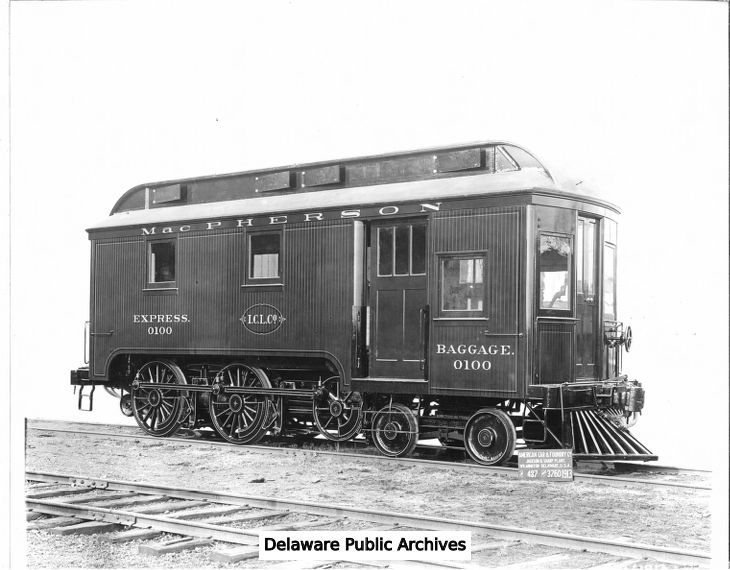
Let’s finish up with this express baggage loco. MacPherson #0100 was built by the Internal Combustion Locomotive Company. It’s essentially a street car used for mail and express. (Delaware Public Archives through Pinterest.)
The file image displays a unique 1913 experimental internal combustion locomotive disguised as a standard railroad baggage car. The side of the wooden car body bears the name “MacPHERSON,” along with the designations “EXPRESS 0100,” “BAGGAGE 0100,” and the initials “I.C.L. Co”. A builder’s sign placed on the track identifies the manufacturer as the American Car & Foundry Co., built at their Jackson & Sharp Plant in Wilmington, Delaware, in 1913. The photograph itself is watermarked by the Delaware Public Archives.
Historical records, including a 1915 issue of the Electric Railway Journal, reveal that “I.C.L. Co.” stands for the Internal Combustion Locomotive Company, which was based in Wilmington. They commissioned this one-man railcar for double-end operation on standard rails. Rather than utilizing steam, the vehicle was powered by a self-starting, six-cylinder gasoline engine capable of developing 450 horsepower.
The vehicle is an engineering oddity because it merges early gasoline technology with traditional steam mechanics. It features a heavy, rigid chassis with large driving wheels connected by side rods—running gear that closely resembles a traditional steam locomotive—housed entirely underneath a wooden passenger-style car body.
Pinterest and a number of historical societies send emails to me almost daily. I just need to take a few minutes to enjoy the photos and start putting collections together – hope to get you another one in a month or so!
Thx,
Kevin
